Posts Tagged: user permissions

Bulk Modify User Account Permissions

If you’re familiar with MIDAS booking software you’ll know that it offers an extensive range of access controls and permissions. Permissions can be assigned on a per-user basis. In fact, if you’ve been following our blog, then you’ll have seen that we’re adding 14 new permissions for MIDAS v4.42 too!

We’re now making it easier to apply bulk permission changes across multiple user accounts.

Previous Behavior

In previous versions, when adding or modifying a user account, an “assign permissions from group” drop-down was presented above the various user permissions that could be assigned:
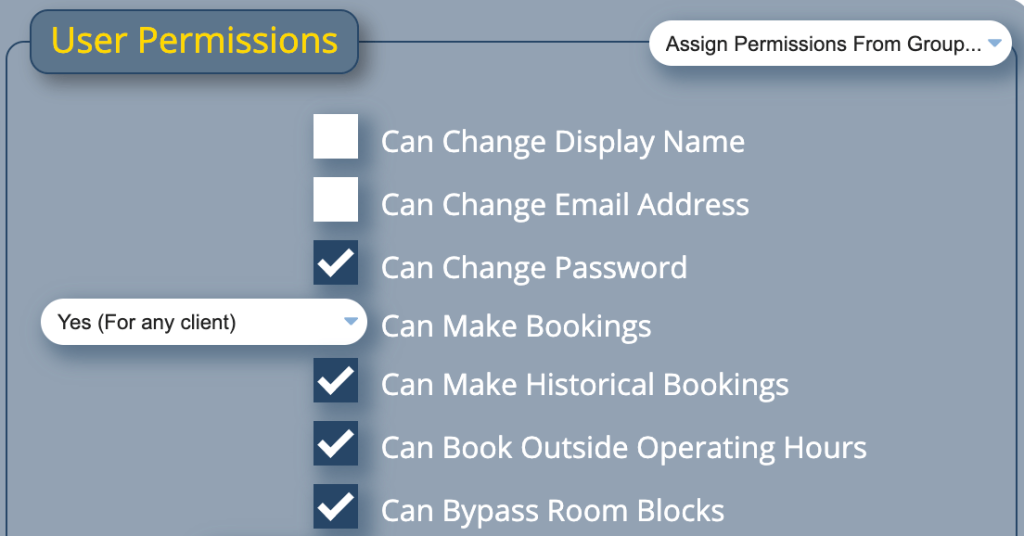
Previous permission assignment method using user groups in MIDAS

This was a great way to quickly copy the current permissions from a user group to an individual user account.

However, this was a one-time action. MIDAS would snapshot the selected user group’s current permissions and apply them to the individual user account. Any subsequent changes to the group’s permissions would not affect existing user accounts.

Introducing Permission Inheritance

So we have re-worked this for MIDAS v4.42. The “Assign permissions from group” selector has been removed and replaced by a new role-based “Inherit Permissions from” selector.

When a user account is set to inherit permissions from a user group, any subsequent changes to that group’s permissions will automatically apply to all linked user accounts.
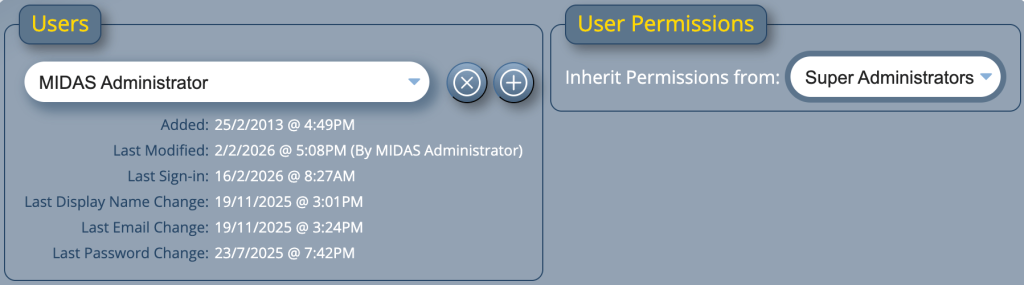
User account inheriting permissions from a user group in MIDAS v4.42

This now allows you to bulk modify user account permissions with ease!

When to use manual permissions

If you still want to grant or revoke individual permissions on a per-account basis, you can – simply set the “Inherit Permissions from” option to “[None]”. When you do this, MIDAS will display the complete list of current permissions for that user, allowing you to make individual changes as required.

User accounts set to ‘[None]’ will not be affected by changes to any user group permissions.

While this new feature may not be all that significant for customers with only a handful of user accounts, larger organizations with several hundred users will benefit greatly from the ability to modify user permissions in bulk.

Expanded Administrative Permissions in MIDAS v4.42

Administrators appreciate the extensive range of permissions that can be assigned on an account-by-account basis in their MIDAS booking software.

These allow the creation of anything from fully privileged administrative accounts to ones with very limited “view only” permissions, and everything in between.

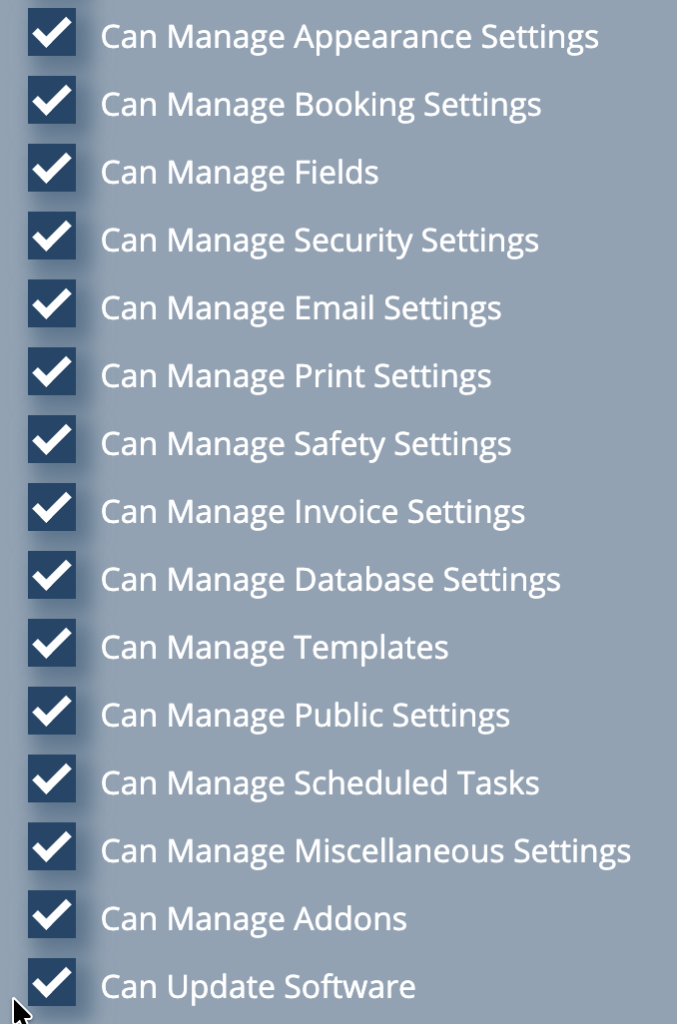
To provide administrators with even greater control, we’ve extended the range of available permissions for MIDAS v4.42 to now include 14 additional administrative permissions.

New granular administrative permissions in MIDAS v4.42

These new permissions replace the previous “Can Manage MIDAS” permission. This generic permission controlled whether a user was able to access the “Manage MIDAS” configuration screens.

Over time the “Manage MIDAS” screens have grown to include a vast array of options and settings. These screens allowed users to change email settings, update templates, configure scheduled tasks, tweak invoice or database settings, and much more.

For v4.42, we have split up the old “Manage MIDAS” screen into separate sections. Access to each section is now controlled by its own dedicated permission. This means, for instance, that you can grant permission to a user to be able to modify your templates, but not allow them to adjust the email settings of your MIDAS system.

The 14 new administrative permissions added in v4.42 are:

When updating from an earlier version to v4.42, any user account which held the “Can Manage MIDAS” permission will automatically be granted all 14 of the new administrative permissions during the update.

Administrators can then refine access for each user account via MIDAS Admin Options → Users.

These changes, together with the ability to make bulk permission changes, provide administrators with significantly greater flexibility and control over who can access specific system settings.


Allow users to change their name or email

MIDAS now allows administrators to control whether users can change their display name, email address, or password – providing greater security and flexibility for shared and individual accounts.

Previously, users couldn’t change their display name or email themselves – only an administrator could do this. An administrator could also grant or deny the ability for each user to be able to change their account password.

Why would you ever not want to allow a user to change their password?” you’re probably thinking!

Many organizations like to create a very limited and generic ‘view only’ account in their MIDAS system. One account that a number of staff all share.

Obviously, you wouldn’t want one person to change the account password on such a ‘shared’ account and lock every one else out. So on this account an administrator could revoke the “Can Change Password” permission to strengthen account security.

For MIDAS v4.41 we’ve added a couple of new and related permissions…

New User Permissions in MIDAS v4.41

Allow Users To Change Their Display Name

With the new “Can Change Display Name” permission granted to a user account, that user will be able to change their display name within your MIDAS system any time they wish.

Allow Users To Change Their Email Address

With the new “Can Change Email Address” permission, a user will be able to change the email address associated with their MIDAS user account. This is the address they use to sign in with and receive notifications at.

How a user updates their details

If a user has been granted at least one of the following permissions…

  • Can Change Display Name
  • Can Change Email Address
  • Can Change Password

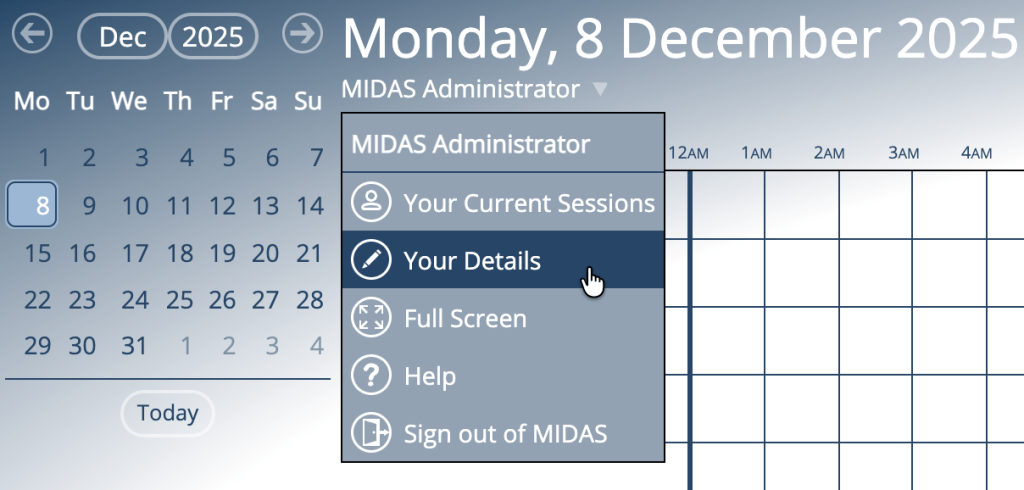
… then they can change their details at any time from the drop-down menu that’s displayed when they select their name (under the main date heading), and then select “Your Details”:

Users can manage their account details in MIDAS v4.41

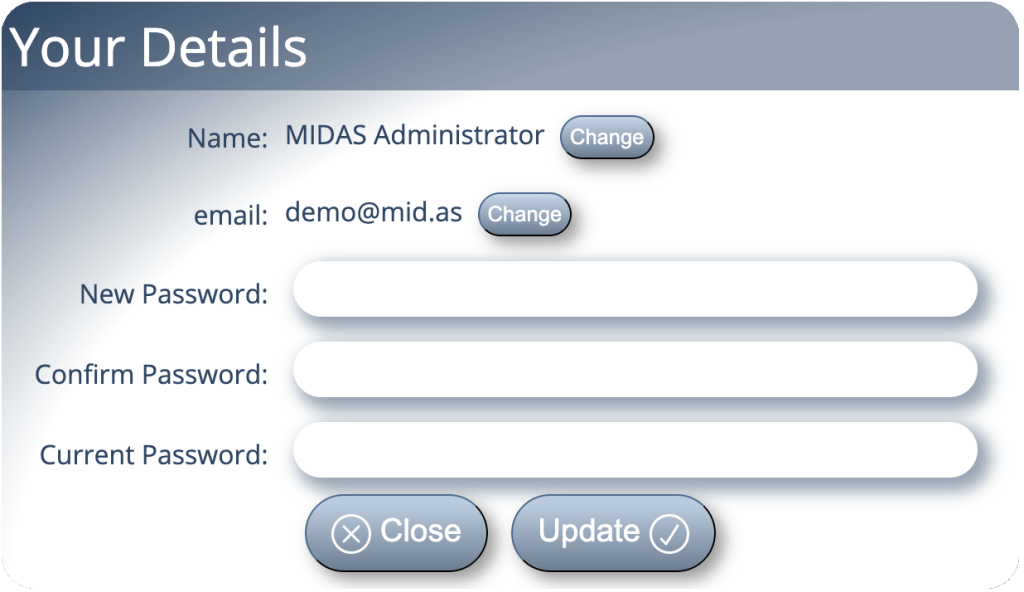
From the “Your Details” dialog, the user will be able to modify one or more of their details (depending upon permissions granted)

Updating your name, email, or password in MIDAS v4.41

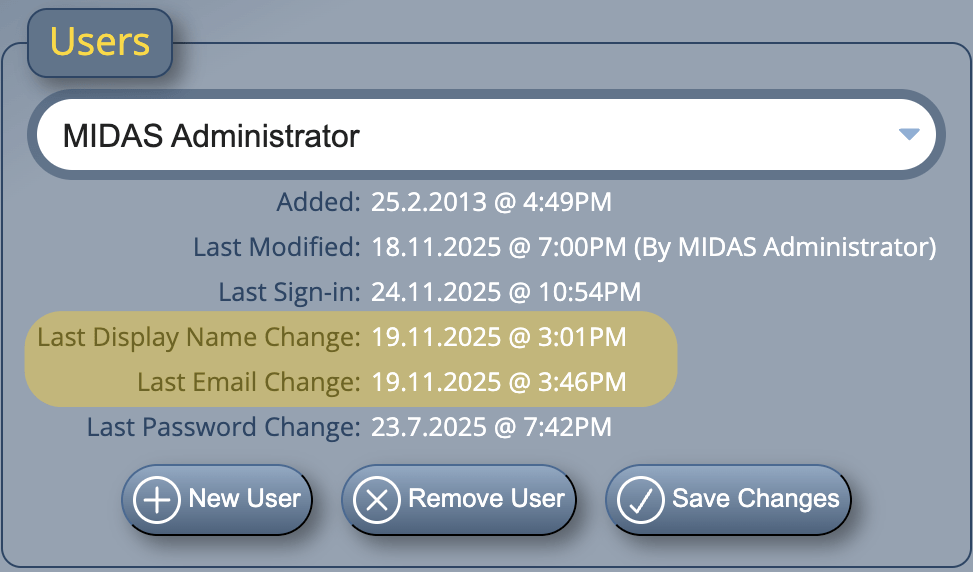
Administrators can also see when a user last updated their details from the Manage Users & Permissions screen:

Administrators can see when each user last made changes to their account

For a complete list of all the booking software permissions that can be assigned on a per-user account basis in MIDAS, please see: https://mid.as/help/manage-users-and-permissions/list-of-available-user-permissions


Limit number of bookings per user per month or year

Limit the number of bookings a user can make for any given period

For MIDAS v4.30 we’ve improved the range of options available for the “Maximum bookings allowed” setting.

This is a per-user setting enabling administrators to restrict the number of bookings individual users can make for a given period.

This setting itself isn’t new – it was first introduced in v4.11. However, this setting initially only allowed an administrator to set a maximum number of bookings each user could add to any individual date.

For v4.15, the setting was expanded to include an alternative “Per Week” option. This allowed restrictions to be placed on the maximum number of bookings a user could add to any given week.

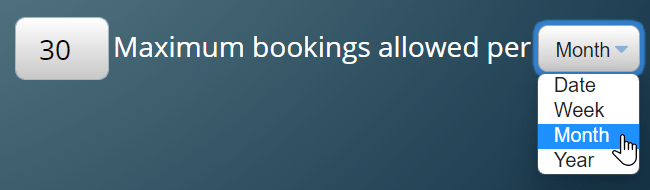
With MIDAS v4.30, we’ve now added a further two options to this setting – Month and Year.

These new additional options give administrators even greater control over bookings. Users can now be limited to a maximum number of bookings for any date, week, calendar month, or calendar year.