Here are MIDAS HQ we love getting feedback from our customers! Whether positive or critical, all feedback is important to us. Feedback helps us to continually develop and improve our MIDAS room booking & resource scheduling software and service.
Our customer feedback is overwhelmingly positive. In fact, you can read some of these comments on our website. We’re also on independent review sites such as TrustPilot too.
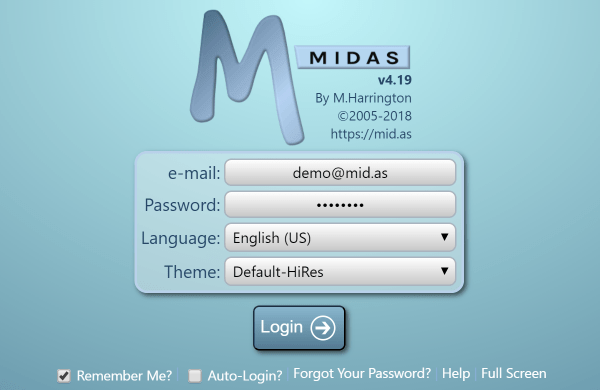
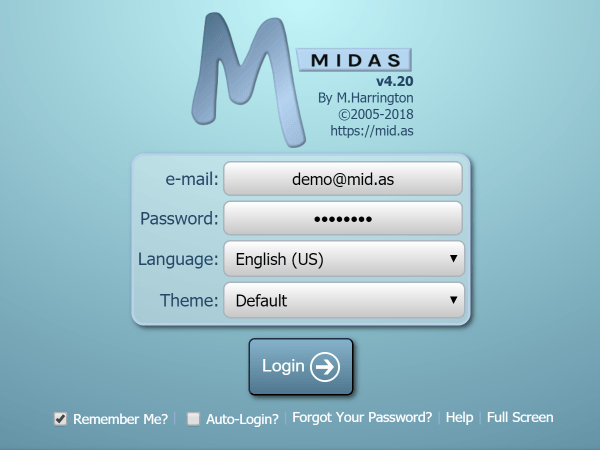
However, in recent times a handful of customers have commented that they perceive the MIDAS user interface (UI) a little “dated”.
We wanted to begin addressing this for our next MIDAS update. For v4.20 we’ve introduced a number of changes and improvements in this area. You can read about these changes in this blog post.
But it’s also useful to explain some of the challenges we’ve faced with regards to the UI over the years.
Ensuring maximum browser compatibility
As you may or may not know, MIDAS has been in continuous active development for well over a decade. Our philosophy has always been to support ALL popular web browsers. That includes Internet Explorer, Mozilla Firefox, Google Chrome, Opera, Apple Safari, and more recently Microsoft Edge.
 Supporting all these browsers has been an enormous task over the years. But we feel strongly that our users should have a choice of which web browser they use. We’ve been committed to ensuring a consistent MIDAS experience across browsers. We believe users shouldn’t forced to use one particular browser in order to use our MIDAS software.
Slow development of Internet Explorer
It’s fair to say that the most difficult web browser to maintain support for over the years continues to be Microsoft’s Internet Explorer. The challenge has primarily been because IE has always lagged way behind all other vendor’s browser offerings in terms of its development, updates, and support for the latest standards. Essentially, the web has developed and evolved significantly over the years we’ve been developing MIDAS. Yet over this period, Internet Explorer hasn’t kept up.
To some extent we’ve been “held back” over the years by our decision to continue to support customers who force their uses to use Internet Explorer. However, as of today the only version of Internet Explorer we officially support is 11. We’ve already deprecated support for IE10 & 9, IE8, IE7, and IE6 over the past decade.
Continuing to support MIDAS in IE11 for the very small (and ever decreasing) percentage of our users who continue to use this old browser, limits how we can develop MIDAS, particularly in terms of the user interface.
The demise of Internet Explorer 11
Whilst we would have loved to have dropped IE11 support long ago, Microsoft continue to support IE11. They have committed to providing mainstream support for IE11 until the end of life of the operating systems upon which it’s installed. This includes Windows 7, 8 and 10. Windows 7 & 8 have both now reached their EOL (End Of Life) for mainstream support. Windows 10 however is still actively supported by Microsoft and will continue to be for the foreseeable future (for a minimum of at least two years).
That’s why we’ve taken the difficult – but necessary – decision that at some point during 2019 we’ll officially be dropping IE11 support in MIDAS.
This won’t necessarily mean that MIDAS will suddenly cease to function for IE11 users next year. But it does mean that over time new features and new user interface elements and enhancements may not display or – even function correctly – if you continue to access MIDAS using Internet Explorer 11.
Migrating from Internet Explorer
If you’re currently an IE11 user, there is however, plenty of time to switch to a different web browser. There’s also plenty of choice when it comes to modern alternative web browsers.
MIDAS will continue to be supported in recent versions of Firefox, Chrome, Safari, Edge, and Opera.
We appreciate that this may affect a very small number of users. However, we hope this post gives some insight and understanding as to why we’re making this decision. We’re also confident that this will give you plenty of time to switch to an alternative, more modern, web browser.
If you have any questions or concerns over how this may impact you and your organization’s use of MIDAS, please don’t hesitate to contact us. Our friendly team will be only too happy to help!










 Supporting all these browsers has been an enormous task over the years. But we feel strongly that our users should have a choice of which web browser they use. We’ve been committed to ensuring a consistent MIDAS experience across browsers. We believe users shouldn’t forced to use one particular browser in order to use our
  Continuing to support MIDAS in IE11 for the very small (and ever decreasing) percentage of our users who continue to use this old browser, limits how we can develop MIDAS, particularly in terms of the user interface.